
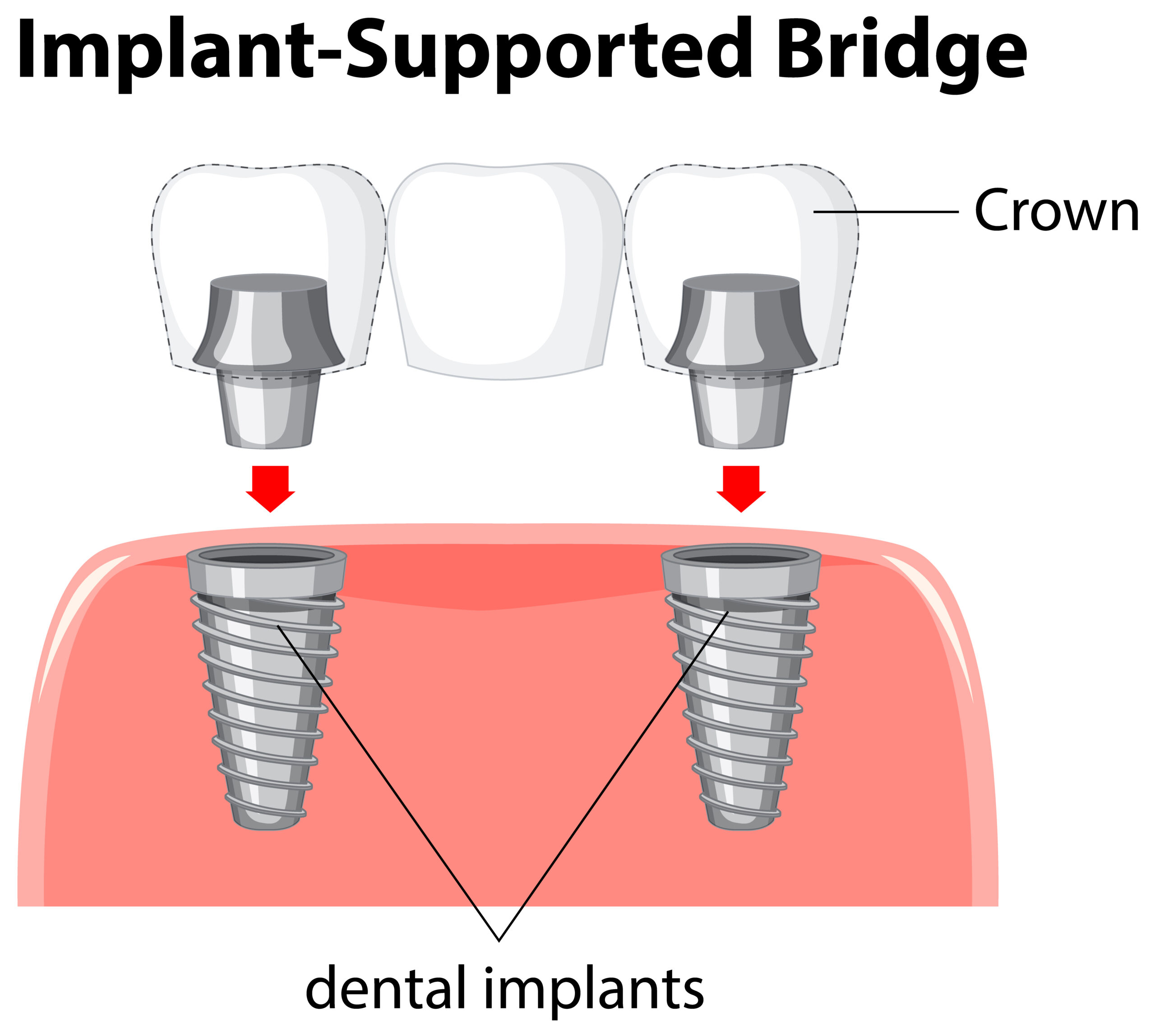
Dental implants are a popular way to replace missing teeth. An implant-supported bridge uses dental implants to hold a bridge in place. This option is strong and looks natural. If you have lost several teeth, an implant-supported bridge may help. In this guide, you will learn what an implant-supported bridge is, how dental implants work, and what to expect from the process.
What Is an Implant-Supported Bridge?
An implant-supported bridge is a dental device. It replaces several missing teeth in a row. Instead of resting on your gums or attaching to nearby teeth, the bridge connects to dental implants. These implants are small metal posts placed in your jawbone. Over time, the bone grows around the implants, making them stable. Then, the bridge is attached to the implants. This creates a secure and natural-looking smile.
Who Needs an Implant-Supported Bridge?
Many people can benefit from an implant-supported bridge. You may need one if:
However, not everyone is a good candidate. For example, if you have certain health problems or weak jawbone, your dentist may suggest other options. Always talk to your dental specialist to see what is best for you.
Benefits of Implant-Supported Bridges
There are many reasons people choose implant-supported bridges. Some key benefits include:
Additionally, you can eat, speak, and smile with confidence. According to the American Dental Association, dental implants have a high success rate and are safe for most people.
The Procedure: Step-by-Step
The process for getting an implant-supported bridge takes several steps. Here is what you can expect:
Each step is important for a good result. Your dentist will guide you through the process and answer any questions.
Risks and Possible Complications
Like any dental procedure, implant-supported bridges have some risks. However, most people do not have serious problems. Possible risks include:
But with proper care and regular dental visits, most issues can be prevented or treated early. According to the Centers for Disease Control and Prevention (CDC), dental implant complications are rare when done by trained professionals.
Aftercare and Maintenance Tips
Taking care of your implant-supported bridge is important. Here are some tips to help you keep your new smile healthy:
With good care, your implant-supported bridge can last for many years.
Cost and Insurance Considerations
The cost of an implant-supported bridge can vary. It depends on how many implants you need and where you live. In general, dental implants cost more than regular bridges or dentures. However, they often last longer and need less repair. Some dental insurance plans may cover part of the cost. It is a good idea to check with your insurance provider before starting treatment. Your dentist can also help you understand payment options and what to expect.
Prevention and Oral Health Guidance
Keeping your mouth healthy is the best way to avoid tooth loss. Here are some simple steps:
By following these tips, you can protect your teeth and gums. Healthy habits help you keep your smile for life.
In summary, an implant-supported bridge is a strong and natural-looking way to replace missing teeth. If you are thinking about dental implants, talk to a dental specialist. They can help you decide if an implant-supported bridge is right for you.